There was a ~41% of drop off rate after creating an account and before starting taxes.
With limited data and resources, we couldn't find the exact root cause.
Assumed some reasons might be:
While the exact reason is unclear, to help reduce drop-off, the team focused on improving onboarding by asking a few key questions to understand each user’s situation and recommend the right tax form. A problem found is that many times users think they need to file for business taxes but actually should be filing for personal taxes under Schedule C (sole proprietorship).
So we agreed that an onboarding flow would help capture their situation and guide them to the correct form.
Success Results:
This design is now live, and all new TaxAct users experience it during account creation, helping guide them to the correct form.
Objectives


Based on analytics, there is high drop-off before a user gets to the screen after the welcome page.

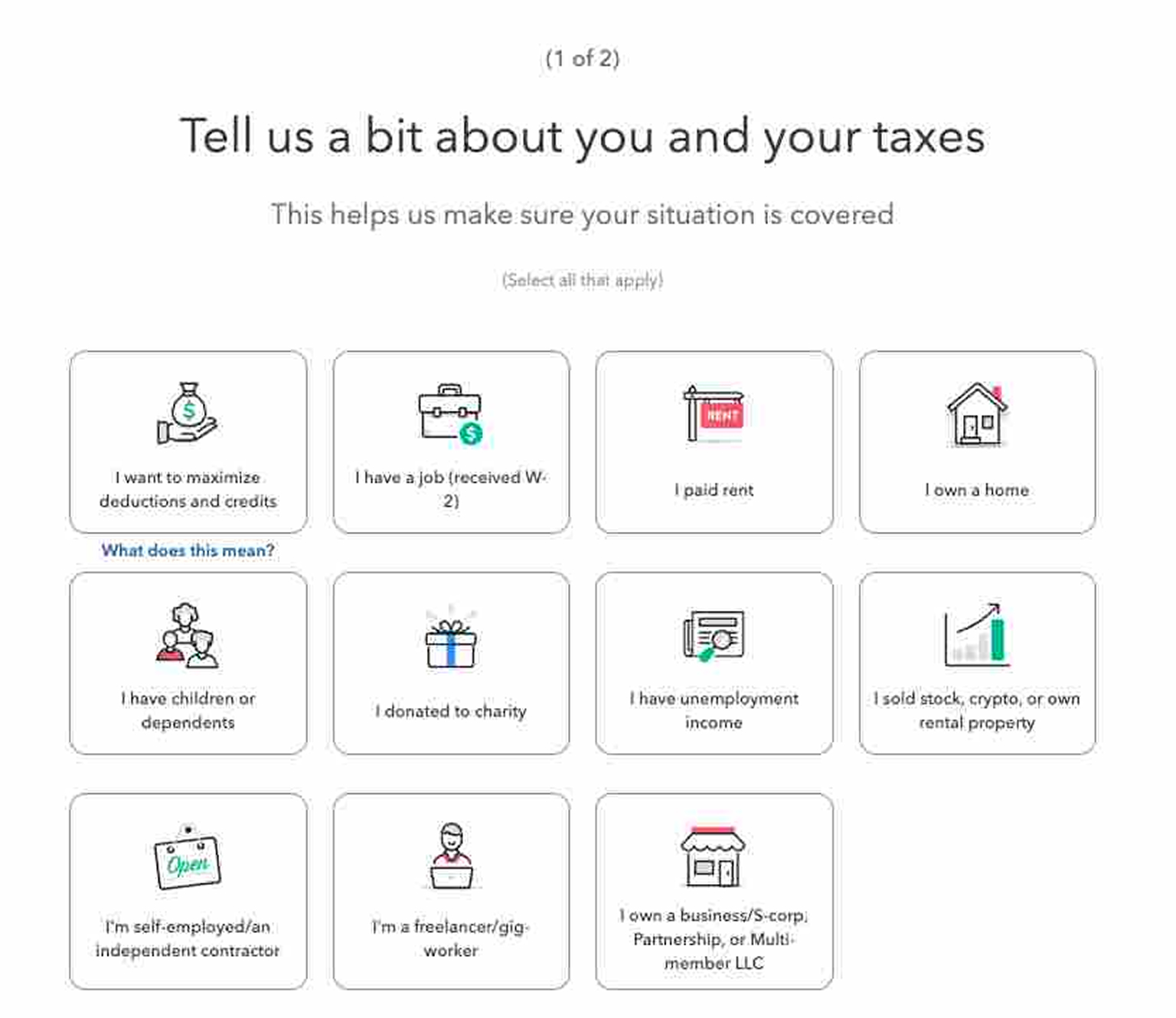
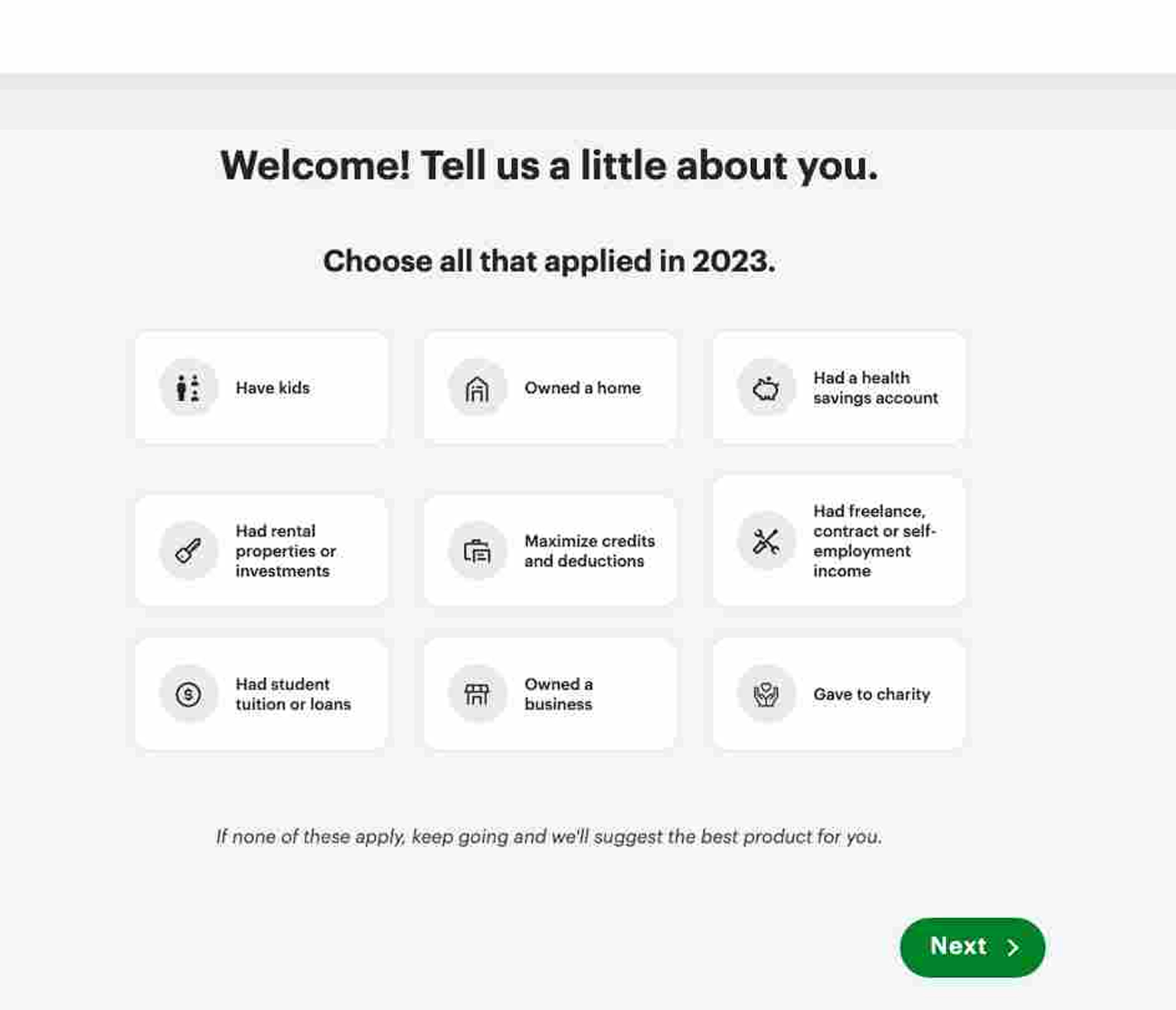
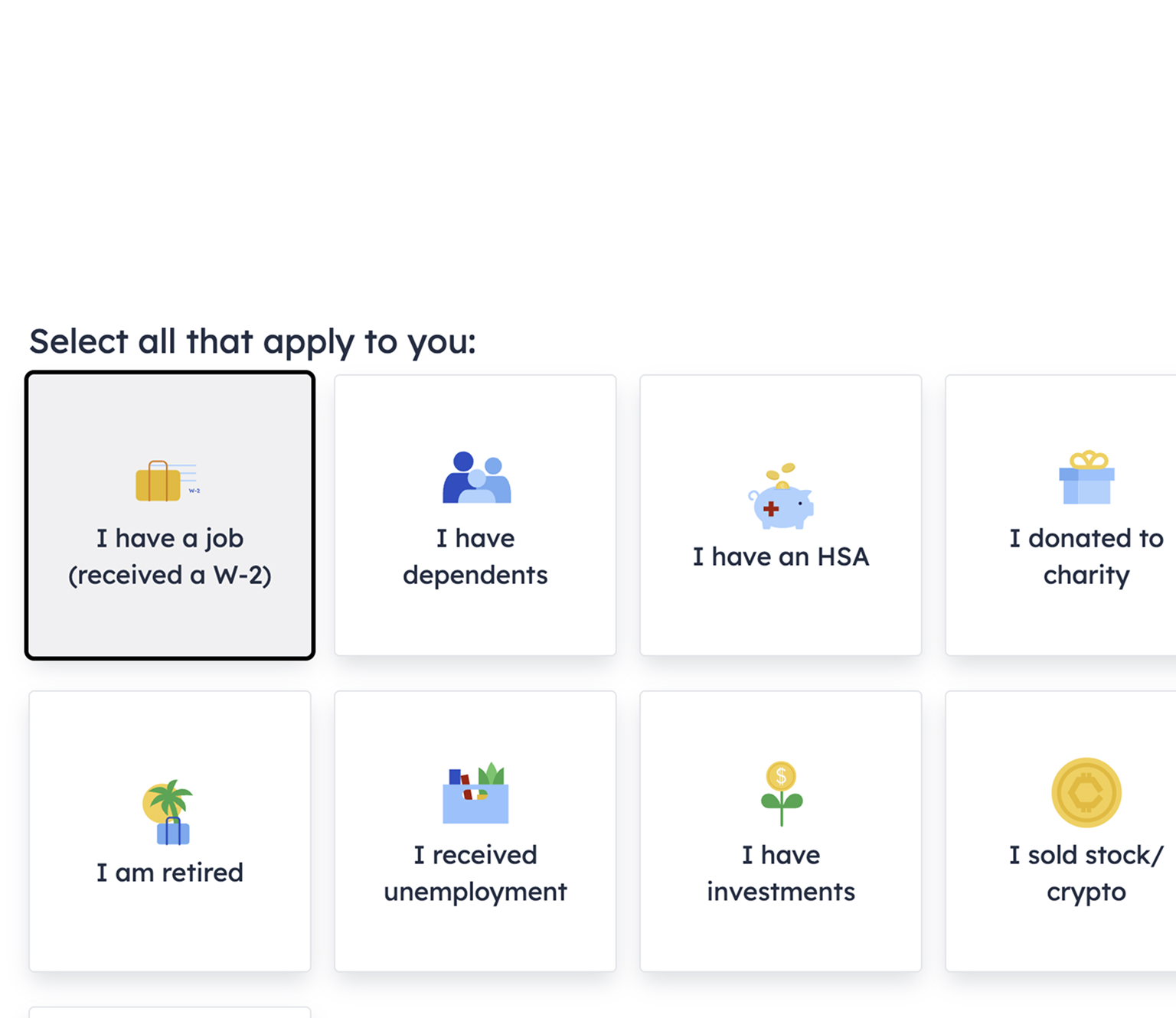
TurboTax and the IRS Schedule B questions.

Looking at TurboTax experience for inspiration.
Design Objectives
During this phase, we focused on creating the least amount of questions needed to understand the user's situation and recommend business or personal taxes.
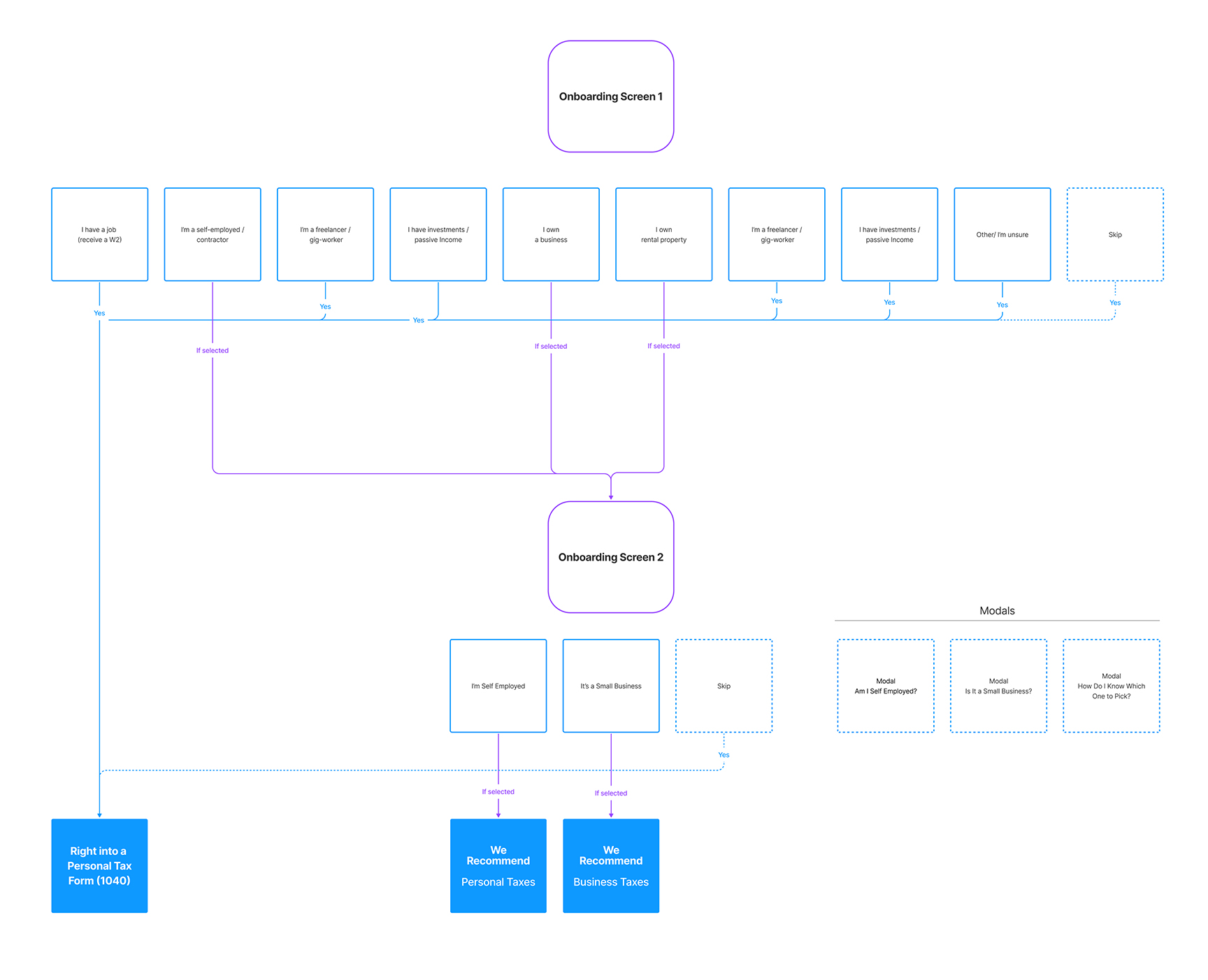
Flowchart of how we were thinking onboarding would work for this project.
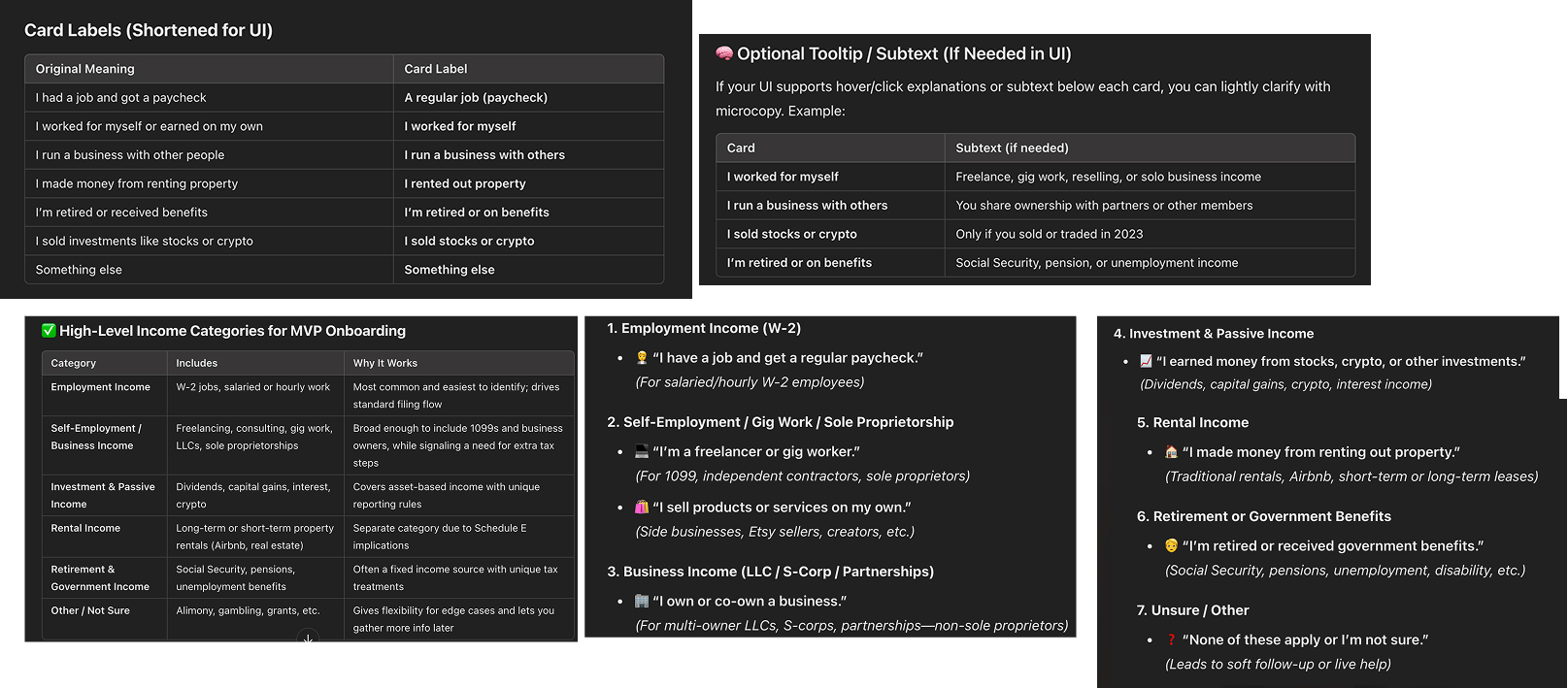
Leveraged AI to figure out how to phrase the categories
Reviewed this video to understand personal vs business taxes
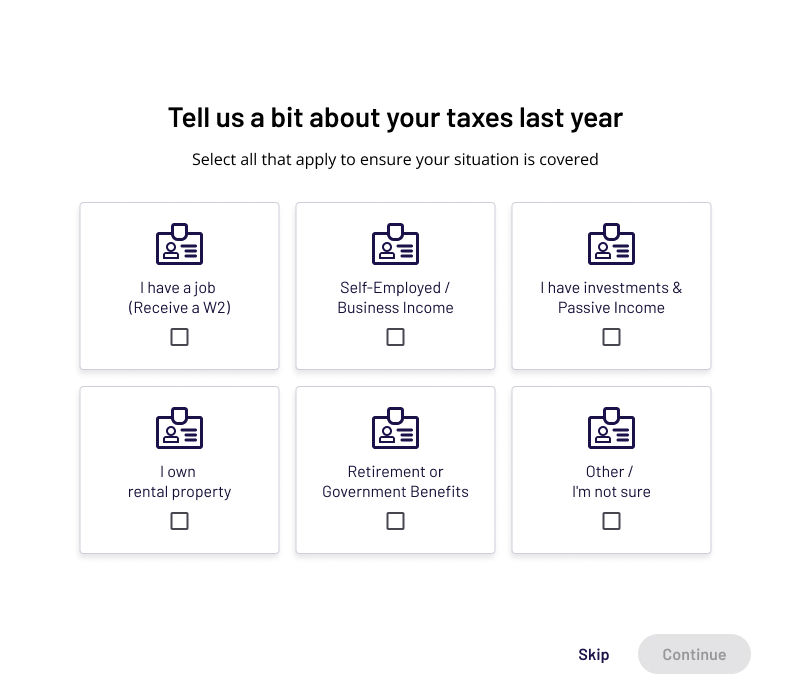
Initial ideation
Had my coworker test the design because we were limited with time. My coworker was a perfect candidate because they have an LLC and unsure how they would file because they typically pay someone to do their taxes.
Research Goals

Research Findings
This has been implemented and is the very first experience all new users see after creating an account and starting their taxes.
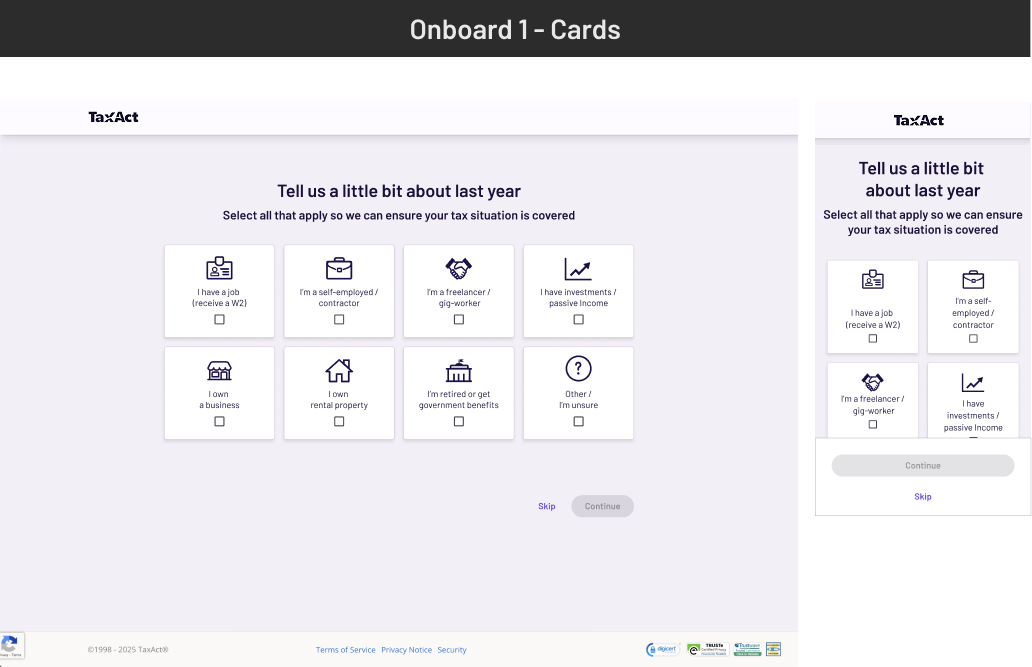
First screen to understand if the user has something that might qualify as a business.

Second screen that tries to understand how the user's business is setup.

Third screen that recommends what type of tax form the user would want to fill out (personal or business).
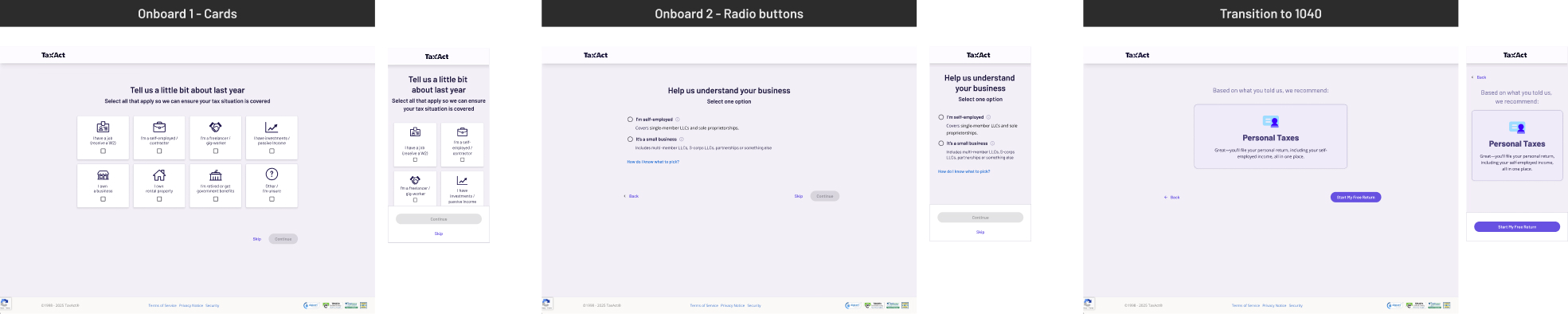
The final designs for the onboarding experience.
This project took a bit of time to understand the different tax forms and when users would most likely fill them out. We used ChatGPT to get ideas for the categories and for content throughout. We also looked at TurboTax for inspiration. After talking with users, we felt this is almost like a catch net to let users know that even though they have a business it might not need to be filed as business taxes for IRS purposes.